Decatising Machine Process, Types & Benefits in India
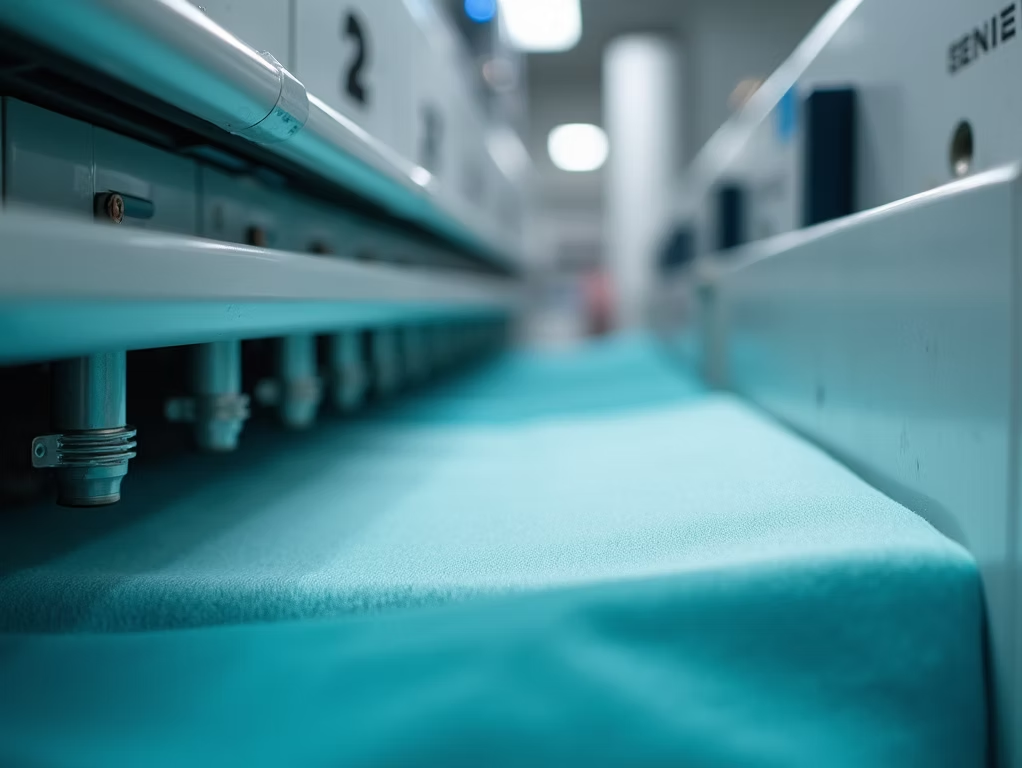
Decatising is a steam-based fabric finishing process used to improve the dimensional stability, surface finish, and handle of fabrics.
· 7 April
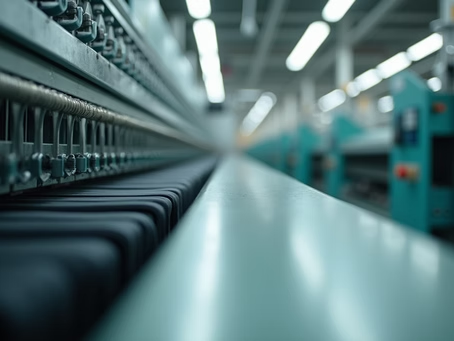
Decatising machines play a crucial role in the textile industry, especially in fabric finishing processes. These machines help in stabilizing the fabric dimensions, enhancing the texture, and improving the overall quality of the textile products. Understanding the pricing of decatising machines in India is essential for manufacturers and industrial processing units aiming to optimize their production efficiency and cost-effectiveness.
When considering the purchase of a decatising machine, it is important to understand the factors that influence its price. The pricing of these machines in India varies based on several parameters:
The Indian market offers a range of decatising machines, from basic models suitable for small-scale operations to sophisticated units designed for large textile mills. It is advisable to evaluate the specific requirements of your production line before making a purchase decision.
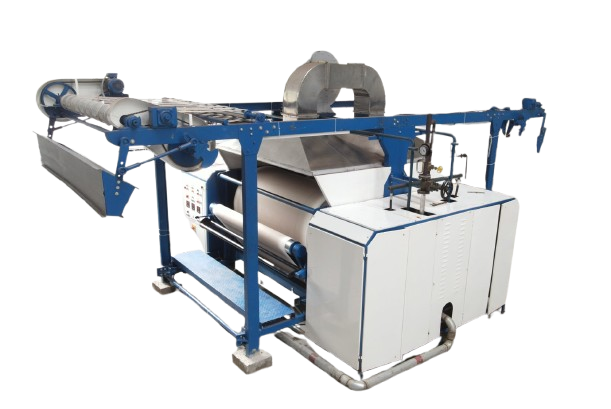
To better understand the pricing, it is helpful to break down the main components that contribute to the cost of a decatising machine:
Setting up a textile factory involves multiple investments beyond machinery. The cost depends on factors such as location, factory size, infrastructure, labor, and technology adoption. Here is a general overview:
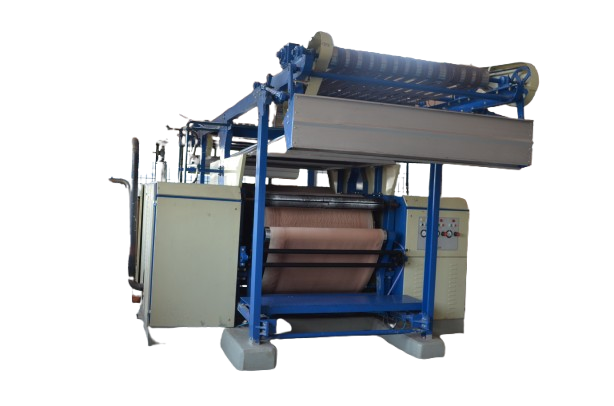
When assessing the cost of decatising machines, consider the following practical tips:
For those interested in detailed pricing and specifications, consulting industry experts and manufacturers directly is advisable. Online resources and industry reports can provide general insights, but personalized advice ensures alignment with specific production needs.
Investing in a decatising machine is a strategic decision that impacts fabric quality and production
efficiency. By understanding the factors influencing pricing and evaluating machines based on capacity,
technology, and support, manufacturers can select equipment that meets their operational goals.
Continuous innovation in textile machinery manufacturing, as exemplified by industry leaders, ensures that
advanced and cost-effective solutions remain accessible. This commitment to quality and innovation supports
the growth and competitiveness of textile production units worldwide.
Choosing the right decatising machine is not just about the initial cost but about securing a reliable,
efficient, and sustainable production process for the future.
4 April
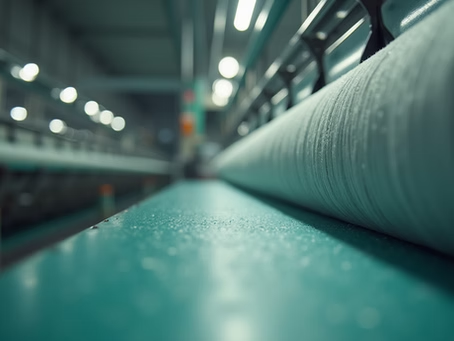
Singeing machines play a crucial role in textile manufacturing by improving fabric quality and appearance. These machines remove protruding fibers from fabric surfaces, resulting in a smoother, cleaner finish. For textile manufacturers and industrial processing units, selecting the right singeing machine involves balancing performance, features, and cost. In this post, I will explore the key aspects of affordable singeing machines, focusing on pricing and features that matter most to the industry.
When considering singeing machines, price is a significant factor. However, affordability does not mean compromising on quality or efficiency. The cost of singeing machines varies based on several factors:
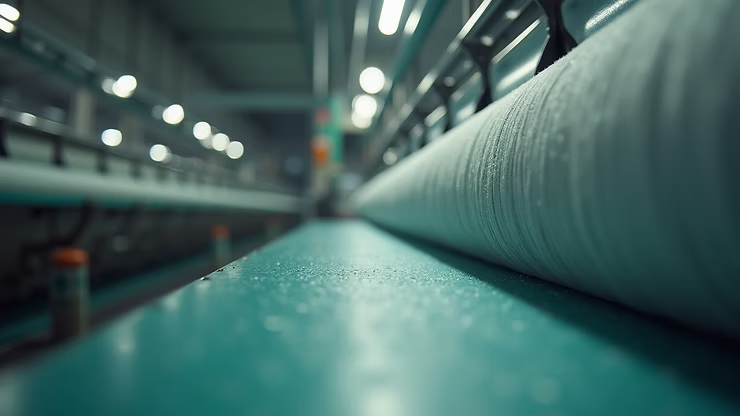
Choosing the right singeing machine requires understanding the features that impact fabric quality and operational efficiency. Here are some important features to consider:
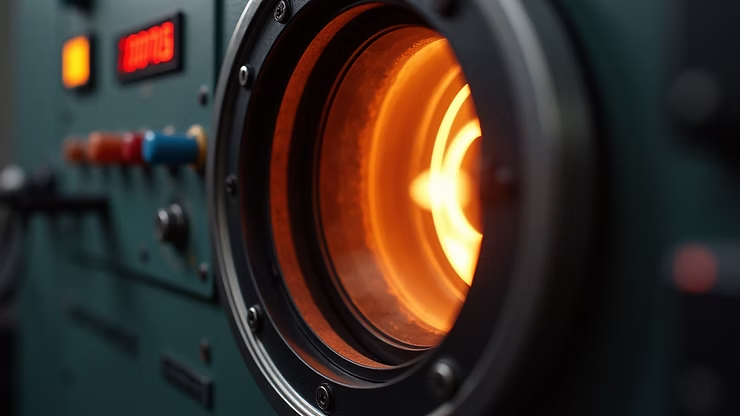
The singeing process involves passing fabric over a flame to burn off surface fibers. Adjustable flame control allows operators to fine-tune the intensity based on fabric type and thickness. This flexibility helps prevent fabric damage and ensures consistent results.
Controlling the fabric feed speed is essential for uniform singeing. Machines with variable speed settings enable manufacturers to optimize processing for different fabric weights and textures.
Safety is paramount in industrial settings. Affordable singeing machines should include features such as flame failure detection, emergency stop buttons, and protective covers to minimize risks during operation.
Modern singeing machines incorporate energy-saving technologies that reduce fuel consumption and operational costs. Look for machines with efficient burners and insulation to maximize energy use.
Machines designed for easy access to components and simple cleaning procedures reduce downtime and maintenance costs. This feature is especially valuable in high-volume production environments.
While fully automated singeing machines may be more expensive, affordable models often include basic control panels for monitoring and adjusting key parameters. This improves process consistency and reduces operator error.
Singeing can be performed using various methods, each suited to different fabric types and production requirements. Understanding these types helps in selecting the appropriate machine.
This is the most common method, where fabric passes over a gas flame. It is suitable for cotton, polyester, and blended fabrics. Gas singeing machines are widely used due to their efficiency and relatively low operating costs.
In this method, fabric contacts a heated metal plate that burns off surface fibers. Plate singeing is less common but useful for delicate fabrics that may be damaged by open flames.
An eco-friendly alternative, biogas singeing uses biogas as fuel instead of conventional gas. This method reduces environmental impact and can be cost-effective in regions with biogas availability.
Infrared singeing uses infrared radiation to remove fibers without direct flame contact. It is suitable for sensitive fabrics and offers precise control but is generally more expensive.
Some machines combine singeing with steam treatment to improve fabric smoothness and reduce static. This hybrid approach enhances fabric quality but requires more complex machinery.
Based on my experience and industry insights, here are some actionable tips for selecting a singeing machine that balances affordability and performance:
Identify the types of fabrics you process most frequently. Choose a machine compatible with those fabrics to avoid damage and ensure optimal results.
Match the machine capacity to your production needs. Overcapacity machines increase costs unnecessarily, while undercapacity machines may slow down production.
Focus on features that directly impact fabric quality and safety. Adjustable flame control, speed regulation, and safety mechanisms should be non-negotiable.
Calculate potential energy savings from efficient machines. Lower operating costs can offset higher initial investment over time.
Reliable after-sales service and availability of spare parts are critical for minimizing downtime.
Whenever possible, see the machine in operation or request sample processing to evaluate performance firsthand.
Seek reviews or case studies from other textile manufacturers to understand real-world machine performance.
The textile industry is evolving, and singeing machines are no exception. Innovations focus on improving efficiency, sustainability, and automation. Some emerging trends include:
Manufacturers investing in these technologies will likely offer machines that provide better value and performance in the coming years.
Selecting an affordable singeing machine is a strategic decision that impacts fabric quality, production
efficiency, and operational costs. By understanding pricing factors and key features, textile manufacturers
can make informed choices that align with their production goals.
I encourage industry professionals to explore options carefully, considering both immediate affordability
and long-term benefits. For those interested in exploring competitive options, the affordable singeing
machine price range offers a practical starting point.
Investing in the right singeing machine today can enhance fabric quality, reduce waste, and improve overall
productivity - essential factors for maintaining competitiveness in the global textile market.
26 March
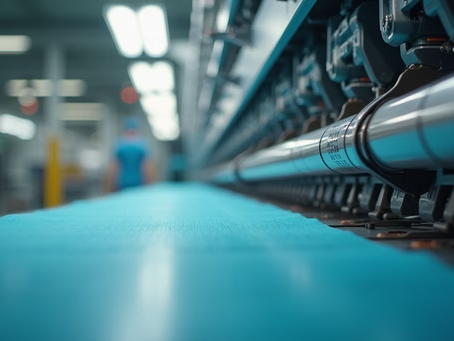
In the competitive world of textile machinery manufacturing, staying ahead requires a blend of innovation, precision engineering, and a deep understanding of industry needs. Gayatri Engineers Textile Equipment has established itself as a key player in this domain, consistently delivering advanced solutions that empower textile production globally. This post explores the inner workings, values, and technological advancements that define this company, offering insights into how it supports the textile industry’s evolving demands.
Gayatri Engineers Textile Equipment was founded with a clear mission: to provide reliable, efficient, and cost-effective machinery tailored to the textile sector. Over the years, the company has built a reputation for quality and innovation by focusing on several core principles:
These principles have helped the company grow from a regional supplier to a global leader, trusted by textile manufacturers and industrial processing units worldwide.
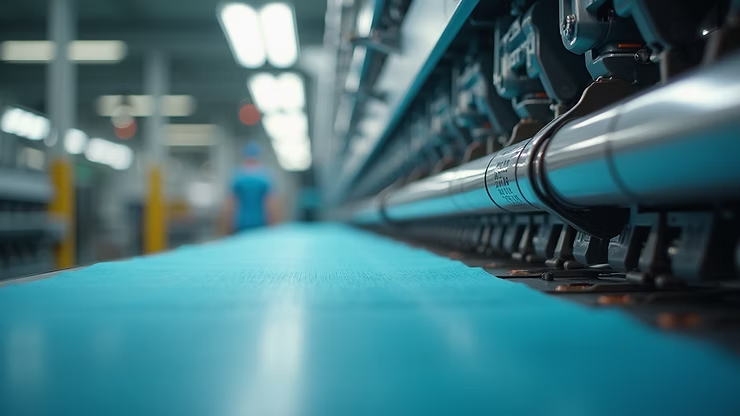
One of the standout features of Gayatri Engineers Textile Equipment is its commitment to integrating cutting-edge technology into its product range. This includes:
Gayatri Engineers Textile Equipment maintains rigorous quality control processes throughout the manufacturing cycle. This commitment to quality is evident in several ways:
By adhering to these standards, the company guarantees that its equipment meets the demanding requirements of textile production environments.
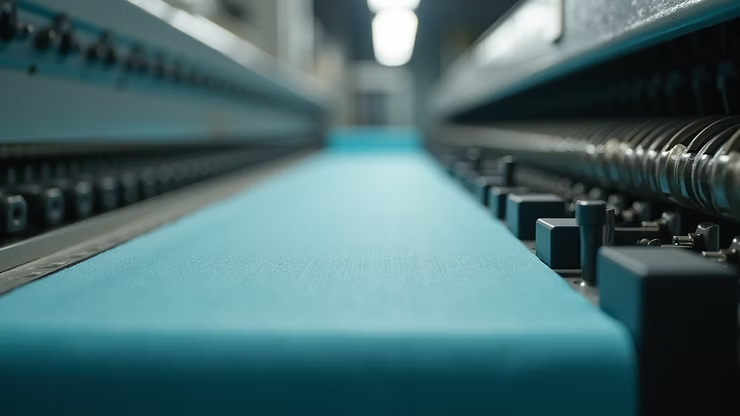
Innovation is at the heart of Gayatri Engineers Textile Equipment’s strategy. The company invests heavily in research and development to create machinery that addresses current challenges faced by textile manufacturers. Some key areas of innovation include:
Gayatri Engineers Textile Equipment has expanded its footprint beyond its base in Vapi, serving clients across multiple continents. The company’s ability to deliver tailored solutions has made it a preferred partner for textile manufacturers seeking reliable machinery that meets international standards.
One example of this global impact is the company’s collaboration with various industrial processing units to optimize their production lines. By understanding local market needs and challenges, Gayatri Engineers Textile Equipment provides machinery that enhances productivity and reduces operational costs.
br
For those interested in learning more about the company’s offerings and capabilities, visiting the Gayatri Industrial Engineers Vapi website provides detailed information and contact options.
As the textile industry continues to evolve, so does the demand for smarter, more efficient machinery. Gayatri Engineers Textile Equipment is well-positioned to lead this transformation by focusing on:
26 March
In today’s competitive textile industry, controlling textile finishing cost has become more critical than ever. One of the most fuel-intensive processes is the singeing machine, and recent geopolitical tensions in the Middle East have significantly increased singeing machine fuel cost across global markets.
For textile manufacturers, especially in India, this has created serious challenges in maintaining profitability while ensuring high-quality fabric finishing. In this blog, we explore the impact of these disruptions, the best fuel alternatives for singeing machines, and practical ways to improve energy saving in textile finishing.
The Middle East plays a vital role in supplying fuels like LPG and natural gas. Any instability in the region leads to:
A textile singeing machiner removes protruding fibers from fabric using direct flame. This ensures:
Choosing the best fuel for singeing machine in textile mills depends on availability, infrastructure, and long-term cost benefits.
Improving efficiency is the fastest way to achieve cost saving techniques in textile processing. Here are proven strategies:
Modern burners improve combustion and reduce wastage, leading to better gas burner efficiency in textile operations.
Maintaining the correct air-fuel mixture ensures:
Recovering waste heat from exhaust gases can:
Proper flame height, fabric speed, and burner position help:
Cleaning burner nozzles, filters, and pipelines ensures smooth fuel flow and prevents excess consumption.
Proper insulation reduces heat loss and improves overall system efficiency.
Using automation systems for:
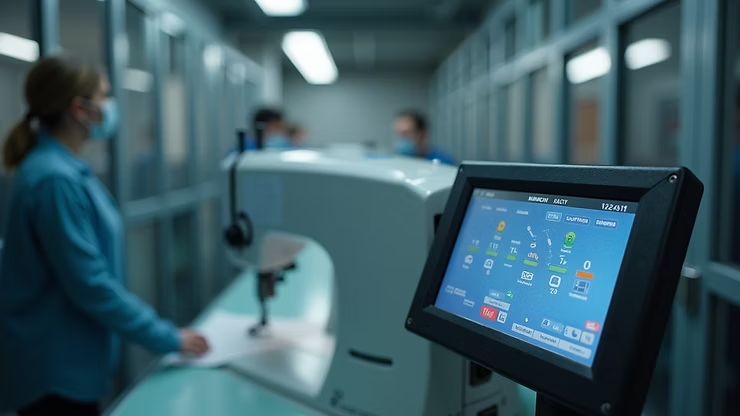
The most effective way to manage rising singeing machine fuel cost is by combining:
The impact of Middle East conflict on textile industry has made it clear that relying solely on traditional fuels is no longer sustainable. Rising costs and supply uncertainties demand a shift toward smarter energy solutions.
By adopting the right fuel alternatives for singeing machines and investing in energy saving in textile finishing, textile manufacturers can not only reduce costs but also improve efficiency and product quality.
Forward-thinking textile mills that focus on textile fuel cost optimization today will be better positioned to compete in the global market tomorrow.
This article aims to provide a clear, practical guide for textile manufacturers navigating the complexities introduced by geopolitical conflicts. The focus remains on actionable solutions that support sustained productivity and cost-effectiveness in singeing machine operations.
22 Dec 2025
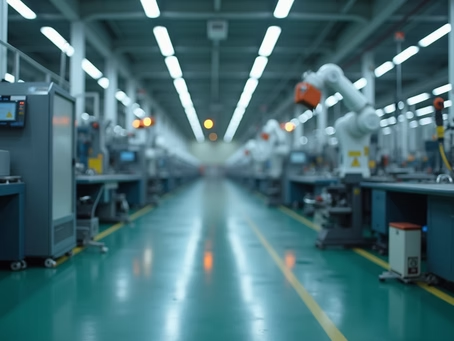
India's industrial sector is rapidly evolving, driven by innovation, technology, and a growing demand for efficiency. However, one of the biggest challenges industries face is managing costs while maintaining high-quality engineering standards. Affordable industrial engineering solutions are essential for Indian industries to stay competitive in the global market. This article explores practical, cost-effective strategies that can help industries optimize their operations without compromising on quality.
Affordable industrial engineering focuses on designing, improving, and implementing systems that maximize productivity and minimize costs. In the Indian context, this means leveraging local resources, adopting innovative technologies, and streamlining processes to suit the unique challenges of the market.
By focusing on these components, Indian industries can achieve significant cost savings and improve overall performance.
To implement affordable industrial engineering, industries must adopt a systematic approach. Here are some actionable strategies:
Lean manufacturing is about eliminating waste and improving processes. Indian industries can benefit from:
Sourcing materials locally reduces transportation costs and supports the local economy. It also allows for better quality control and faster turnaround times.
Investing in employee training ensures that the workforce is skilled in the latest engineering practices and technologies. This reduces errors and increases productivity.
Modular design allows for easier maintenance and upgrades, reducing downtime and repair costs.
Implementing energy-saving technologies such as LED lighting, solar power, and efficient motors can significantly cut operational costs.
Technology plays a crucial role in affordable industrial engineering. Indian industries can harness various tools and innovations to optimize their operations.
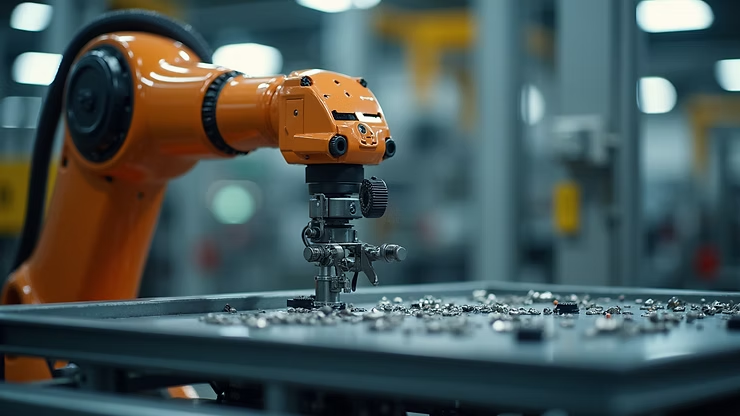
A textile manufacturer in Tirupur implemented lean manufacturing and IoT-based monitoring systems. This resulted in a 20% reduction in production costs and a 15% increase in output within one year.
By adopting modular design and local sourcing, a Pune-based automotive parts company reduced its inventory costs by 30% and improved delivery times by 25%.
The unit integrated solar power and energy-efficient machinery, cutting energy expenses by 40% and enhancing sustainability.
These examples demonstrate how affordable industrial engineering can transform Indian industries by reducing costs and improving efficiency.
To ensure long-term success, Indian industries should focus on sustainable growth by:
In conclusion, Indian industries have immense potential to thrive by adopting affordable industrial engineering solutions. Embracing innovation, optimizing resources, and integrating technology are key to achieving this goal. For industries looking to enhance their operational efficiency, exploring cost-effective engineering solutions can provide a significant competitive edge. By focusing on practical, actionable strategies, Indian industries can not only reduce costs but also improve quality and sustainability, paving the way for a prosperous industrial future.
1 dec 2025
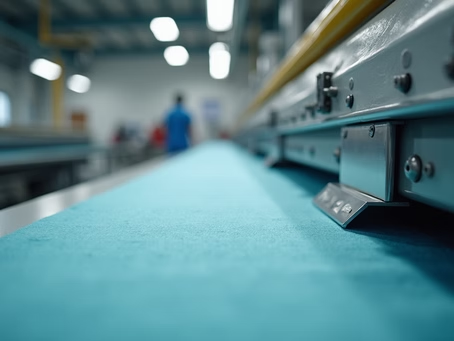
In the textile industry, fabric finishing plays a crucial role in determining the final quality and appearance of textiles. Among the various finishing processes, decatising stands out as a vital step to improve fabric texture, stability, and sheen. This process involves the use of specialized machines designed to treat fabrics under controlled heat and pressure, ensuring they maintain their shape and look after washing or use.
Decatising machines are essential in fabric finishing equipment setups, especially for wool, polyester, and blended fabrics. They help remove creases, set the fabric’s dimensions, and enhance the overall hand feel. This article explores how decatising machines contribute to fabric quality, the types of machines available, and practical tips for optimizing their use in textile finishing.
Fabric finishing equipment encompasses a range of machines and tools used to enhance the physical and aesthetic properties of textiles after weaving or knitting. These processes include washing, drying, calendaring, and decatising, among others. The goal is to improve fabric durability, appearance, and performance.
Fabric finishing equipment is critical because untreated fabrics often have residual stresses from weaving or knitting, which can cause shrinkage, distortion, or uneven texture. Proper finishing ensures that fabrics meet quality standards and customer expectations.
Using the right fabric finishing equipment, including decatising machines, is essential for textile manufacturers aiming to deliver premium quality products.
Decatising machines come in various designs, each suited for specific fabric types and finishing requirements. Understanding these types helps manufacturers select the best equipment for their production lines.
These machines use heated rollers to press and smooth the fabric. The fabric passes between the rollers under controlled temperature and pressure, which sets the fabric’s dimensions and removes wrinkles.
Steam decatising involves exposing fabric to steam in a controlled environment, often inside a chamber or drum. The steam relaxes the fibers, allowing them to be reshaped and set.
These machines combine steam treatment with vacuum pressure to enhance fabric penetration and drying. The vacuum helps remove excess moisture quickly, reducing processing time
Flatbed machines use a flat heated surface to press fabric layers. This method is effective for heavy or thick fabrics that require even pressure distribution.
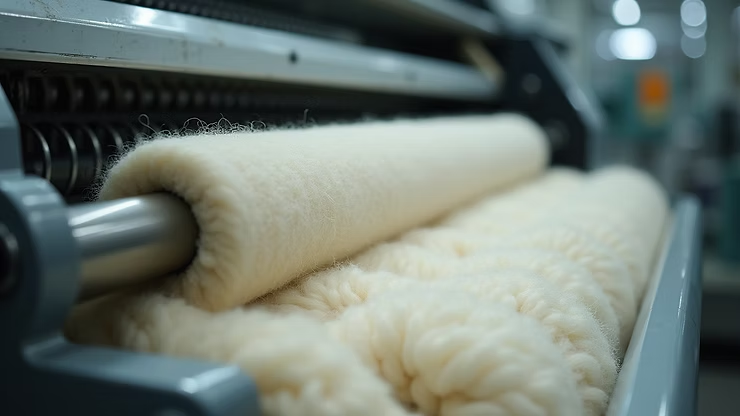
The primary function of decatising machines is to enhance fabric quality by stabilizing the fabric structure and improving its appearance. Here’s how they achieve this:
During weaving or knitting, fabrics can develop tension and unevenness. Decatising machines apply heat and pressure to relax the fibers and set the fabric’s dimensions permanently. This prevents shrinkage and distortion during subsequent washing or garment manufacturing.
The finishing process smooths the fabric surface, making it softer and more pleasant to touch. This is especially important for wool and blended fabrics, where a smooth hand feel is a key quality attribute.
Decatising machines can impart a subtle gloss to fabrics by flattening the fiber surface. This enhances the visual appeal of garments made from these fabrics, making them look more luxurious and well-finished.
Fabrics often develop creases during storage or transport. Decatising machines effectively remove these imperfections, ensuring the fabric looks pristine before cutting and sewing.
By stabilizing the fiber structure, decatising reduces the risk of fabric damage during use. This leads to longer-lasting garments and textiles.
The textile industry is continuously evolving, with new technologies improving fabric finishing processes. Recent innovations in fabric finishing equipment include:
Modern machines feature automated controls for temperature, pressure, and timing, reducing human error and increasing efficiency. Digital interfaces allow operators to monitor and adjust settings in real-time.
New decatising machines use advanced insulation and vacuum technology to reduce energy consumption. This not only lowers operational costs but also supports sustainable manufacturing practices.
Some fabric finishing equipment now combines decatising with other processes like calendaring or steaming, saving space and time in production lines.
There is a growing focus on using water and chemical-free finishing methods. Innovations include dry decatising techniques that minimize environmental impact.
Advanced machines allow manufacturers to customize finishing parameters for different fabric types and end uses, enhancing versatility.
Adopting these innovations helps textile producers stay competitive and meet increasing demands for quality and sustainability.
To fully leverage the advantages of fabric finishing equipment, consider the following strategies:
4 Aug, 2025
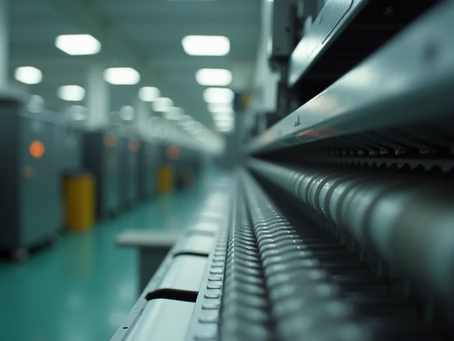
In the fabric processing industry, where quality and speed are essential, innovation drives success. One transformative tool that has captured the attention of manufacturers is the Shiner Calander Machine. This machine not only boosts productivity but also enhances the quality and versatility of textiles. Let’s explore the impressive capabilities of the Shiner Calander and its significance in today’s fabric processing land
A Calander Machine finishes textiles using a series of heated rollers. By applying pressure and heat, these machines create various fabric finishes such as smoothness and luster. The Shiner Calander is notable for producing high gloss and shine, making it popular in the fashion and textile industries.
Historically, calandering techniques date back centuries. However, modern advancements have greatly increased the efficiency and functionality of these machines. With cutting-edge technology, the Shiner Calander enables precise control over processing parameters, ensuring high-quality fabric outputs consistently.
One of the standout benefits of the Shiner Calander Machine is its ability to elevate fabric quality. For instance, applying optimal heat and pressure transforms rough textiles into smoother, more polished materials, significantly enhancing their visual appeal.
Consider a manufacturer producing 10,000 yards of cotton fabric. By utilizing the Shiner Calander, they can guarantee consistent quality across the entire batch, leading to reduced waste. A consistent finish not only enhances the look of the fabric but also contributes to its durability and wearability. In the competitive textile market, maintaining high quality is vital for customer satisfaction and brand loyalty.
In today's fast-paced production environment, efficiency is key. The Shiner Calander Machine significantly improves production speed by streamlining the finishing process.
Thanks to automation, modern Shiner Calanders can operate with minimal supervision. This feature reduces labor costs and the risk of human error. For example, manufacturers can switch between different fabric types with little downtime, allowing them to meet varying market demands efficiently.
Furthermore, faster processing times lead to reduced energy consumption per yard of fabric. Reports indicate that manufacturers experience a 15% decrease in energy costs when using the Shiner Calander, making it an attractive investment for those seeking to maximize throughput while minimizing waste.
The adaptability of the Shiner Calander Machine is another reason it’s a key player in the fabric processing industry. This machine can handle a diverse range of textiles, from soft silks to sturdy denim and canvas.
Adjustable settings allow manufacturers to tailor the finish to their specific needs, whether they're after a soft feel or a glossy surface. This flexibility enables companies to diversify their offerings, aligning with customer preferences and market trends. For example, a producer that previously focused solely on cotton can expand to offer polyester blends, significantly increasing their market share and revenue potentia
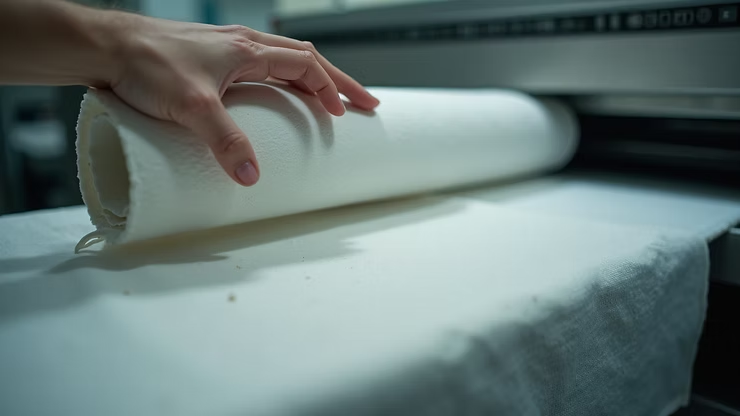
As the industry faces growing scrutiny for its environmental impact, the Shiner Calander Machine supports sustainability initiatives. Its advanced engineering optimizes raw material usage and minimizes fabric waste during processing.
By achieving desired finishes in fewer passes, the Shiner Calander significantly reduces energy consumption compared to traditional methods. This efficiency not only lowers costs but also lessens the carbon footprint associated with textile production.
Additionally, many Shiner Calander Machines are designed to work with eco-friendly finishing agents, allowing manufacturers to adopt sustainable practices without compromising on quality.
The Shiner Calander Machine is not just a tool; it represents the future of fabric processing. As technology continues to evolve, so too will the capabilities of machines like the Shiner Calander. Manufacturers must stay informed about the latest advancements to remain competitive.
Investing in such technology can lead to long-term benefits. It allows businesses to adapt to changing market demands and consumer preferences. By leveraging the Shiner Calander's capabilities, manufacturers can position themselves as leaders in the industry.
The Shiner Calander Machine has become an essential element of the fabric processing industry. By improving fabric quality, increasing production efficiency, and promoting versatility and sustainability, it opens up new pathways for manufacturers. As the industry continues to evolve, adopting advanced machines like the Shiner Calander will be crucial. Understanding how to leverage its capabilities will position businesses for success in a dynamic environment. Innovation in fabric processing is here to stay, and the Shiner Calander Machine is leading the charge towards a better, more efficient future.
26 Jul,2025
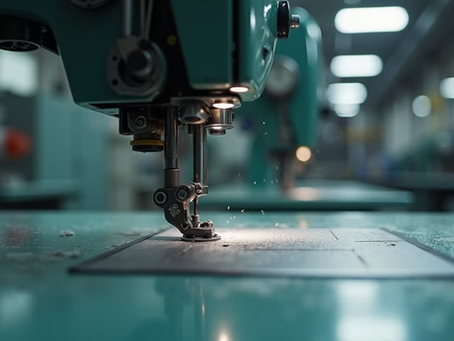
In the textile industry, the quest for durability and aesthetic appeal drives continuous innovation. One such innovation is the singeing machine, a remarkable piece of textile processing equipment that has transformed the way fabrics are treated prior to dyeing and finishing. This blog post explores the significance of singeing machines, their purpose in textile processing, and the broader implications for the industry.
Textile processing equipment encompasses a variety of machines and tools used in the transformation of raw fibers into finished textile products. This includes spinning, weaving, dyeing, and finishing processes. Each step is crucial in ensuring that the final product meets industry standards and customer expectations.
One of the most essential pieces of equipment in this workflow is the singeing machine. This device is designed to remove protruding fibers from the fabric surface, leading to a smoother finish. The singeing process can significantly enhance the fabric's appearance, making it more appealing to consumers.
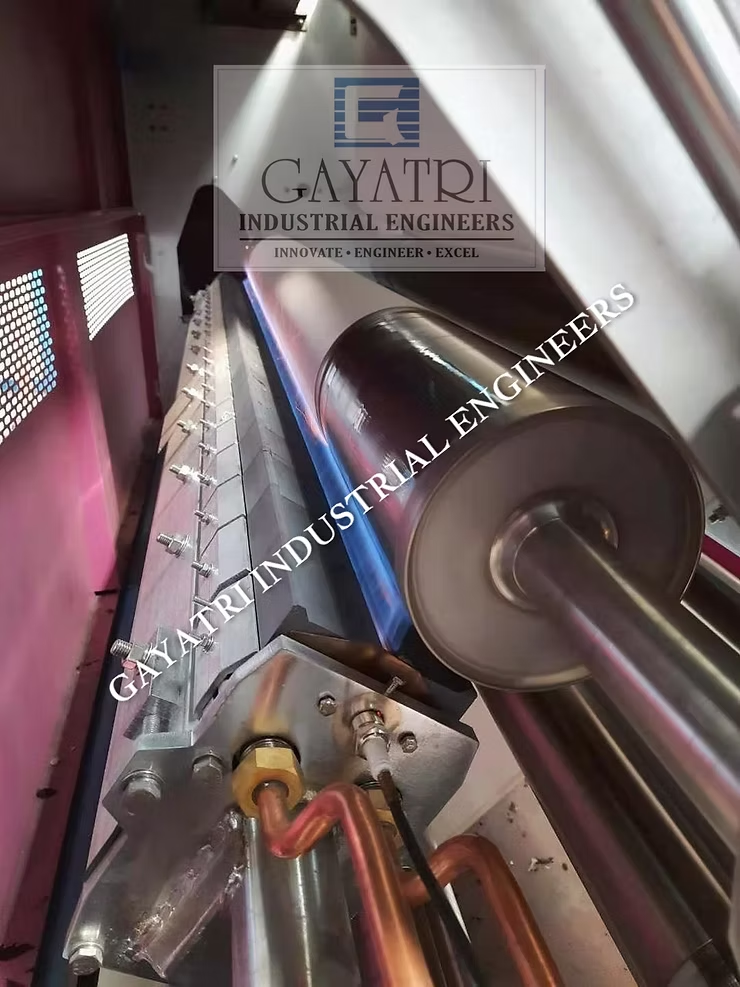
Singeing plays a pivotal role in textile preparation. This process involves passing the fabric through a flame to burn off any lint, fuzz, or loose fibers that may be present on the surface. The result is a cleaner and more uniform fabric that is primed for the subsequent stages of dyeing and finishing.
Removing these unwanted fibers is crucial for a few reasons:
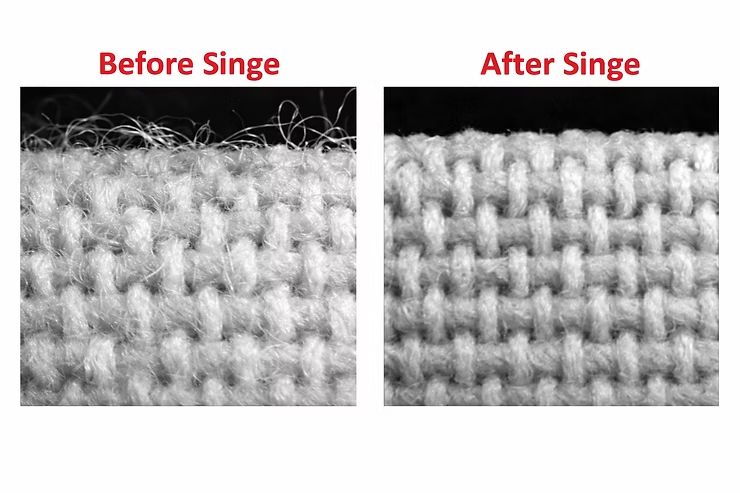
The primary purpose of singeing is to prepare the fabric for further processing. This not only enhances the fabric's appearance but also improves its functional properties. By controlling the singeing process, manufacturers can achieve precise levels of fiber removal, depending on the type of fabric and the desired end product.
Singeing can be particularly beneficial for fabrics that will undergo finishing treatments. For example, fabrics that are designed to be shiny or glossy will greatly benefit from the removal of any surface textures. Furthermore, the singeing process is adaptable, meaning manufacturers can customize parameters such as heat intensity and duration to suit various fabric types.
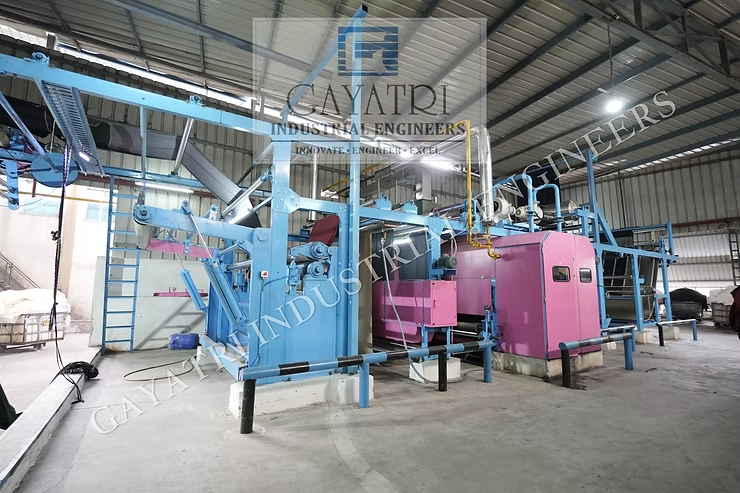
The implementation of singeing machines offers numerous advantages to textile manufacturers. Here are some key benefits:
Singeing machines can process large volumes of fabric quickly, significantly reducing the amount of time required for fabric preparation. This efficiency is particularly important in the fast-paced textile industry, where time-to-market can influence sales success.
By streamlining the fabric preparation process, singeing machines help reduce labor costs and material waste. A more efficient fabric treatment process can lead to lower production costs, which can be a vital factor in maintaining competitive pricing.
Singeing machines allow for greater control over the quality of the fabric being produced. Manufacturers can implement rigorous quality checks to ensure that singeing is performed correctly, leading to consistent fabric quality across different batches.
To ensure optimal performance when using singeing machines, manufacturers should adhere to several best practices:
The evolving demands of the textile industry have prompted innovations in singeing technology. Modern singeing machines are equipped with advanced features such as:
As the textile industry continues to advance, the role of singeing machines will likely grow in importance. The benefits of utilizing these machines include improved aesthetic appeal, enhanced durability, and more efficient production processes.
Manufacturers looking to stay competitive should consider investing in high-quality singeing machines. With the right equipment and training, they can significantly improve their textile processing workflow and ultimately produce superior products that meet consumer demands.
The future of textile processing lies in the balance between technology and tradition. Embracing innovations such as singeing machines will ensure that manufacturers can navigate the challenges ahead, transforming raw materials into high-quality fabrics that captivate consumers.
With the ongoing advancements in textile processing equipment, it's an exciting time for the industry. The continued evolution of technologies, like the singeing machine, promises to revolutionize how we approach fabric treatment for years to come.
15 Jul, 2025
In today's fast-paced textile processing industry, technology is changing the game. Among the most important developments is the introduction of decatising machines. These machines are essential for enhancing fabric quality, ensuring uniformity, and improving production efficiency. In this post, we will delve into the significance of decatising machines in modern textile processing, covering their functions, benefits, and the impact they have on manufacturing practices.
Decatising machines play a pivotal role in the textile industry. They ensure that fabrics are treated uniformly, which is vital for maintaining high-quality standards. As the industry evolves, the demand for efficient and effective processing methods increases. Decatising machines meet this demand by providing advanced solutions that enhance fabric characteristics.
Decatising is a finishing procedure used to treat woven fabrics. It primarily aims to eliminate gauge and prevent shrinkage. During this process, fabrics are exposed to heat, moisture, and pressure. This leads to a finished product that boasts improved dimensions, a softer feel, and better surface quality. Decatising machines are specifically designed to make this operation quicker and more efficient than traditional techniques.
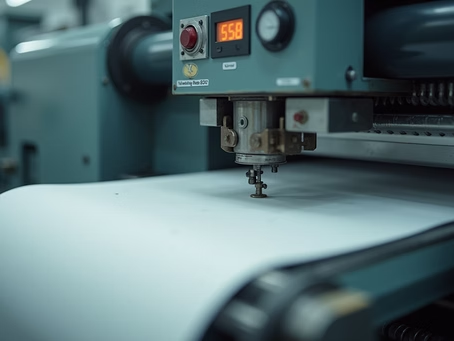
Typically, these machines consist of chambers that hold the fabrics, paired with heating and steaming units, plus rollers for drying. For manufacturers, understanding how these machines operate is crucial for optimizing textile production processes.
The main function of decatising machines is to ensure equal treatment throughout the finishing process. They create controlled environments where temperature and humidity can be precisely adjusted based on the fabric type. For instance, a temperature increase of just 5 degrees can significantly affect a fabric's softness and stability, making this control essential.
Another vital function offered by decatising machines is the reduction of false creasing, which enhances the overall appearance of the fabric. By applying consistent steam and pressure, these machines smooth out any irregularities that may have been produced during prior processing steps. This capability is particularly advantageous for high-end fabrics, where first impressions matter immensely.
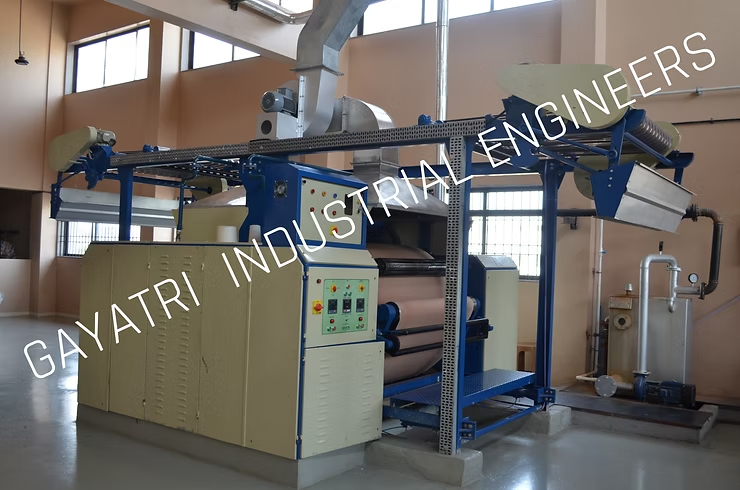
One of the standout benefits of decatising machines is the impressive improvement in fabric quality. For example, fabrics that undergo traditional finishing methods often have a defect rate of around 15%. By employing decatising machines, manufacturers can reduce this rate significantly, ensuring that their products consistently meet market standards. Higher-quality fabrics not only satisfy consumer expectations but also bolster brand reputation.
Decatising machines streamline operations by cutting down on the time needed for fabric finishing. With automated processes, manufacturers can work through larger fabric batches in significantly less time. For instance, a production line that typically handles 1,000 meters of fabric per day might double its output, enabling textile companies to meet tight deadlines and better cater to market demands.
While the initial investment in decatising machines may be considerable, the long-term savings are impressive. The risk of defects can be minimized, significantly reducing costs related to reworks and returns. In fact, manufacturers have reported operational cost reductions of up to 20% by utilizing these machines, maximizing fabric utilization in the process.
Modern decatising machines are increasingly built with sustainability in mind. Many current models incorporate technologies that minimize water usage and cut energy demands. By adopting eco-friendly machines, companies can lower their environmental footprint, aligning with global sustainability initiatives, which is becoming essential in today’s market.
Decatising machines are widely used across various sectors of the textile industry. One major area is woolen and synthetic fabrics, where the benefits of this process are particularly evident. For example, in the woolen segment, decatising machines can enhance dimensional stability, which is crucial for producing quality formal wear. Moreover, decatising is beneficial in creating linens and upholstery fabrics, each requiring specific fabric accommodations that these machines can meet effectively.
The textile industry is experiencing rapid advancements in decatising technology, influenced by the demand for improved quality and efficiency. For instance, the latest machines are equipped with advanced sensors that monitor real-time temperature and humidity levels. This technology allows manufacturers to gather valuable data, facilitating process optimization and consistency across products.
Additionally, newer decatising machines feature smarter automation controls that lessen the need for labor-intensive manual processes. This technological evolution enables manufacturers to adapt to changing industry needs while maintaining high-quality standards.
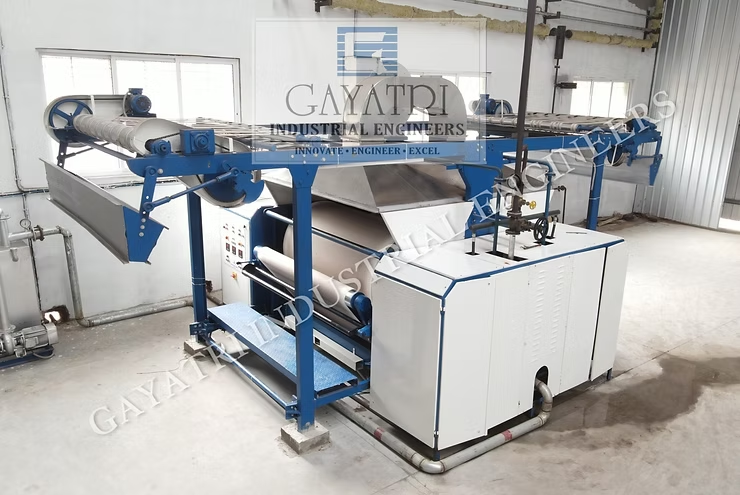
Decatising machines are crucial in modern textile processing. They offer numerous benefits that significantly enhance fabric quality, boost efficiency, and promote sustainable production practices. As technology continues to evolve, the capabilities of these machines are likely to expand, delivering even more value to textile manufacturers.
Implementing the decatising process can transition traditional techniques into more streamlined operations that meet the industry's growing demands. For textile manufacturers aiming to stay competitive, investing in high-quality decatising machines will be an essential move toward achieving long-term success in fabric processing. By recognizing the importance and advantages of these machines, companies can navigate the complexities of contemporary textile production with confidence.
In conclusion, decatising machines represent a significant advancement in the textile processing industry. They not only enhance the quality of fabrics but also improve production efficiency and promote environmentally friendly practices. As the demand for high-quality textiles continues to grow, the role of decatising machines will only become more critical. Manufacturers who embrace this technology will be well-positioned to thrive in an increasingly competitive market.
By understanding the functions and benefits of decatising machines, companies can make informed decisions that lead to improved manufacturing practices and, ultimately, greater success in the textile industry.

24 Jul, 2025
In recent years, we have witnessed remarkable shifts in the technological landscape. Modern tech advancements continue to reshape our lives in every aspect. From communication to transportation, innovation has become the bedrock of our daily existence. Let’s explore how these advancements have affected society and the economy.
One of the most significant impacts of modern technology is the improvement in communication. With the rise of smartphones and social media, people can connect instantly, no matter the distance. For instance, consider how video conferencing tools like Zoom or Microsoft Teams have transformed remote work. According to a study by Gartner, 74% of organizations plan to permanently shift to more remote work post-pandemic. This demonstrates that technology not only enhances communication but also alters workforce dynamics radically.
Moreover, online platforms have made information easily accessible. Instead of spending hours at the library, students and professionals can find research papers and articles within minutes. The availability of data has made education more egalitarian. A report from UNESCO indicates that over 60% of students in developing countries now have access to the Internet, thereby leveling the educational playing field.
Health technology has seen groundbreaking advancements as well. Wearable devices, such as smartwatches, can monitor health metrics in real-time. These devices alert users about irregular heart rates or potential health issues. According to a report from Statista, the global wearable market is projected to reach $60 billion by 2026. This tremendous growth signifies a shift toward taking proactive measures in health management.
Additionally, telemedicine has revolutionized healthcare accessibility. Patients can now consult with doctors virtually, eliminating the need to travel physically for appointments. This is particularly beneficial for individuals in remote areas. A study by the American Medical Association found that 60% of patients were satisfied with their telehealth experiences. This level of satisfaction reflects a major advancement in patient care owing to modern technology.

To better understand the influence of modern technology, here are some of the top innovations that lead the way:
Artificial Intelligence is at the forefront of modern tech advancements. By driving efficiencies in various industries, AI automates repetitive tasks. This allows human resources to focus on more complex problems requiring creativity and emotional intelligence. Companies like Google and Amazon utilize AI algorithms for better customer service through personalized recommendations.
According to research conducted by McKinsey, businesses implementing AI could boost their profitability by up to 38% by 2035. This illustrates that AI is not just a passing trend; it is an integral component of future business operations. Businesses should incorporate AI to remain competitive and deliver enhanced customer experiences
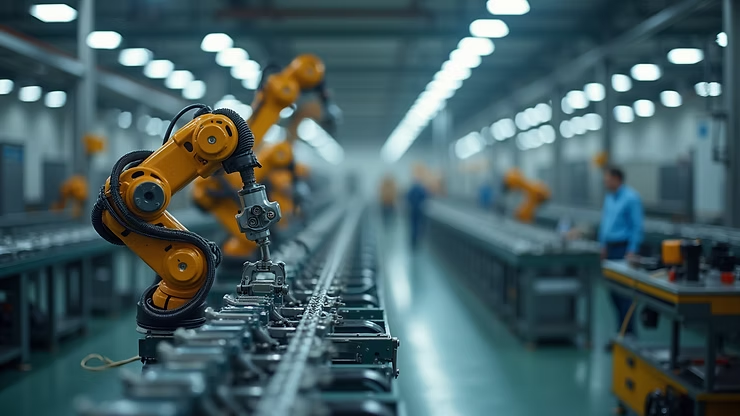
Modern tech advancements also play a vital role in transforming transportation. Electric vehicles (EVs) are gaining immense popularity due to their environmental benefits. Major automakers like Tesla have shifted consumer perceptions about electric mobility. According to the Global EV Outlook 2021 report, the total number of electric cars reached 10 million by the end of 2020.
Autonomous vehicles are also on the rise. Companies like Waymo and Uber are investing heavily in self-driving technology. While fully autonomous vehicles are still in development, the gradual introduction of features like adaptive cruise control is paving the way for a future where human drivers may become obsolete.
With advancements in public transport systems like electric buses and hyperloop technology, commuting is set for a paradigm shift. Cities around the world are increasingly adopting these technologies to enhance urban mobility and reduce carbon footprints.
The economic landscape has transformed significantly due to these advancements. Technology is not merely a tool; it shapes new business models and strategies. Digital platforms have created online marketplaces, allowing even small businesses to reach global audiences. According to Shopify, global e-commerce sales are expected to exceed $4 trillion in the coming years.
However, the rapid pace of innovation poses challenges, particularly in the labor market. While tech creates jobs, it also leads to jobs becoming obsolete. This necessitates a focus on upskilling and reskilling the workforce. Companies and governments should collaborate to provide training programs that match evolving job requirement
The impact of modern technology is undeniable. From enhancing daily communication to revolutionizing healthcare and transportation, it shapes every aspect of society. As we move forward, it is essential to embrace these changes while safeguarding against potential risks.
Investing in education, cybersecurity, and ethical standards surrounding AI and biotechnology will ensure that technological advancements contribute positively to society. Organizations should foster innovation while maintaining policies that prioritize public welfare.
In summary, understanding the impact of technological innovations will be crucial for individuals, businesses, and governments. By harnessing the power of modern technology, we can unlock unparalleled opportunities for growth and development.

Curated perspectives on design, culture, and the art of thoughtful living.
Decatising is a steam-based fabric finishing process used to improve the dimensional stability, surface finish, and handle of fabrics.
Decatising machines play a crucial role in the textile industry, especially in fabric finishing processes. These machines help in stabilizing the fabric dimensions, enhancing the texture, and improving the overall quality of the textile products.
Singeing machines play a crucial role in textile manufacturing by improving fabric quality and appearance. These machines remove protruding fibers from fabric surfaces, resulting in a smoother, cleaner finish.
In the competitive world of textile machinery manufacturing, staying ahead requires a blend of innovation, precision engineering, and a deep understanding of industry needs. Gayatri Engineers Textile Equipment has established itself as a key player in this domain, consistently delivering advanced solutions that empower textile production globally.
Singeing Machine Cost Rising? Impact of Middle East Conflict + Fuel Saving Solutions for Textile Mills
India's industrial sector is rapidly evolving, driven by innovation, technology, and a growing demand for efficiency. However, one of the biggest challenges industries face is managing costs while maintaining high-quality engineering standards.
In the textile industry, fabric finishing plays a crucial role in determining the final quality and appearance of textiles. Among the various finishing processes, decatising stands out as a vital step to improve fabric texture, stability, and sheen. This process involves the use of specialized machines designed to treat fabrics under controlled heat and pressure, ensuring they maintain their shape and look after washing or use.
In the fabric processing industry, where quality and speed are essential, innovation drives success. One transformative tool that has captured the attention of manufacturers is the Shiner Calander Machine.
In the textile industry, the quest for durability and aesthetic appeal drives continuous innovation. One such innovation is the singeing machine, a remarkable piece of textile processing equipment that has transformed the way fabrics are treated prior to dyeing and finishing. This blog post explores the significance of singeing machines, their purpose in textile processing, and the broader implications for the industry.
Decatising machines play a pivotal role in the textile industry. They ensure that fabrics are treated uniformly, which is vital for maintaining high-quality standards. As the industry evolves, the demand for efficient and effective processing methods increases. Decatising machines meet this demand by providing advanced solutions that enhance fabric characteristics..
In recent years, we have witnessed remarkable shifts in the technological landscape. Modern tech advancements continue to reshape our lives in every aspect. From communication to transportation, innovation has become the bedrock of our daily existence. Let’s explore how these advancements have affected society and the economy.